Hospital in Chennai for Giant Cell Tumor of Bone: Treatment, Surgery and the Role of Denosumab
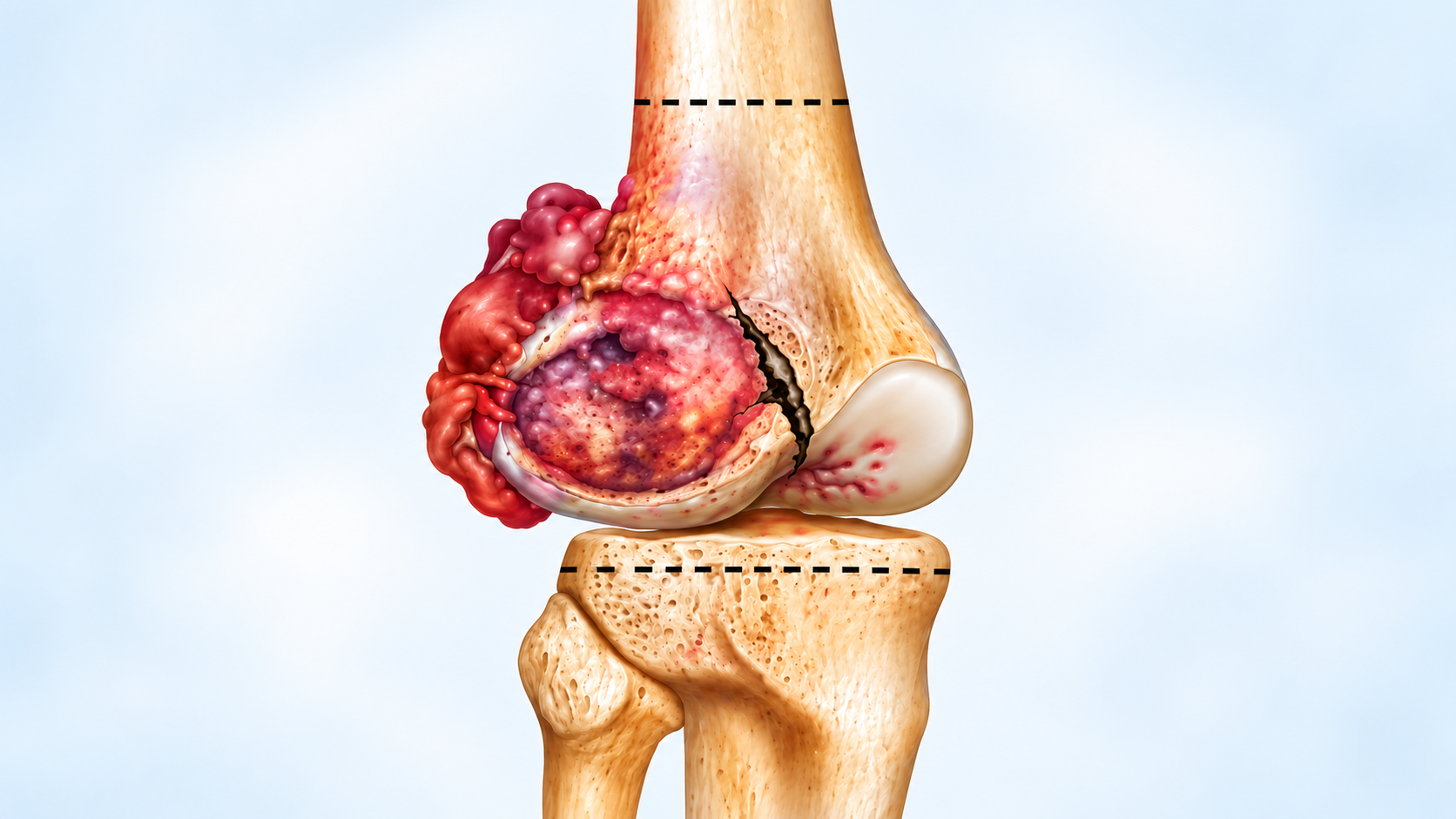
A bone tumor around the knee can sometimes grow significantly and cause severe pain, difficulty walking, and destruction of the surrounding bone. One important condition doctor may encounter is a giant cell tumor of bone (GCTB). Although giant cell tumor of bone is generally classified as a benign tumor, it can behave aggressively locally. It commonly develops near the ends of long bones, particularly around the knee, and can destroy bone as it grows. In rare cases, it can also spread to other parts of the body. For patients and families searching for a hospital in Chennai for evaluation and treatment of a bone tumor, understanding the diagnosis and available treatment options is important. At Olir Super Speciality Hospital, Velachery, patients with suspected bone tumors can undergo appropriate orthopaedic evaluation and imaging to determine the most suitable treatment approach.
What Is a Giant Cell Tumor of Bone?
A giant cell tumor of bone is a type of bone tumor that typically occurs near the end of a long bone, often close to a joint. The knee is one of the common locations because these tumors frequently develop around the lower end of the thigh bone or upper end of the shin bone. The tumor may initially be relatively small, but it can progressively enlarge and destroy the surrounding bone. This is why early evaluation of persistent bone pain or swelling is important.
Can a Giant Cell Tumor Destroy Bone?
Yes. One of the important characteristics of a giant cell tumor of bone is its locally aggressive behaviour. As the tumor grows, it can progressively damage the surrounding bone and, in advanced cases, extend into nearby soft tissues. The video highlights a case in which the tumor had become large and had caused extensive destruction of the bone, resulting in severe pain and difficulty bearing weight. This demonstrates why a growing bone tumor should not be ignored.
What Symptoms Can a Giant Cell Tumor Cause?
Symptoms vary depending on the location and size of the tumor. Possible symptoms include:
- Persistent bone pain
- Increasing pain around a joint
- Swelling
- Difficulty walking
- Difficulty bearing weight
- Reduced movement of the nearby joint
- Weakness of the affected limb
- Fracture through weakened bone
A tumor around the knee may initially be mistaken for a routine joint or sports-related problem. Persistent or progressively worsening symptoms require medical assessment.
Does a Giant Cell Tumor Mean Cancer?
Not necessarily. Giant cell tumor of bone is generally considered a benign tumor, but it can be locally aggressive and cause substantial destruction of bone. Rarely, it can become malignant or metastasize. This distinction is important: Benign does not always mean harmless. A giant cell tumor may not behave like a typical cancer, but its local growth can seriously affect bone structure and function.
How Is a Giant Cell Tumor Diagnosed?
Doctors may use a combination of clinical assessment and imaging. Depending on the situation, evaluation can include: X-Ray An X-ray can reveal changes in the bone and may show a destructive lesion. MRI MRI can provide detailed information about:
- Tumor size
- Bone involvement
- Soft-tissue extension
- Relationship with nearby structures
CT or Other Imaging Additional imaging may be required depending on the location and characteristics of the lesion. Biopsy A biopsy may be necessary to establish the exact diagnosis and distinguish a giant cell tumor from other bone lesions. The final treatment decision should be based on the complete clinical, imaging, and pathological evaluation.
How Is Giant Cell Tumor of Bone Treated?
Treatment depends on factors such as:
- Tumor size
- Location
- Extent of bone destruction
- Soft-tissue involvement
- Whether the tumor has returned
- Whether the tumor can be safely removed
- Patient's overall condition
Surgery is an important treatment for many giant cell tumors of bone. The surgical approach may involve removing the tumor while preserving as much normal bone and joint function as possible. In some cases, reconstruction may be required after tumor removal.
What Is Bone Cement Used for in Giant Cell Tumor Surgery?
The video discusses a case involving treatment of a tumor around the knee and the use of bone cement. In selected cases, after removing a bone tumor, the resulting cavity may be filled with a material such as bone cement to help reconstruct and stabilise the affected area. The exact reconstruction technique depends on the amount and location of bone removed and the condition of the surrounding joint.
What Happens If the Tumor Is Large?
A large tumor may cause extensive destruction of the surrounding bone. The surgical strategy then becomes more complex. Doctors may need to consider:
- Complete removal of the tumor
- Preservation of important structures
- Reconstruction of the bone
- Joint preservation where possible
- Stability of the limb
- Functional recovery
- Risk of recurrence
Treatment needs to be individualised according to the extent of disease.
What Is the Risk of Giant Cell Tumor Coming Back?
Giant cell tumors can recur locally after treatment. The risk depends on several factors, including the tumor's characteristics and the treatment approach used. This is why follow-up is important even after apparently successful treatment. Regular clinical and imaging follow-up can help identify a recurrence early.
What Is Denosumab?
Denosumab is a targeted monoclonal antibody that acts on the RANK/RANKL pathway involved in bone remodeling. It has an established role in selected patients with giant cell tumor of bone, particularly when the tumor cannot be removed surgically. The video specifically discusses denosumab injections as part of management following treatment of a giant cell tumor. However, denosumab is not appropriate for every patient with a giant cell tumor. Its use, timing, duration, and monitoring should be decided by the treating specialist.
How Can Denosumab Help in Giant Cell Tumor?
Denosumab targets RANKL, a pathway involved in the activity of osteoclasts and the bone destruction associated with giant cell tumors. In selected cases, this can help control the tumor's bone-related activity. According to the NCI, denosumab is approved for adults and skeletally mature adolescents with giant cell tumor of bone that cannot be removed with surgery. Its use in an individual patient requires specialist assessment.
Is Denosumab Given Before or After Surgery?
The timing depends on the clinical situation. Denosumab may be used in selected patients when surgery is difficult or when a multidisciplinary treatment strategy is being considered. The video describes an approach in which injections are started around the surgical treatment and subsequently continued at specified intervals. The exact dosing schedule and duration should not be generalised from one patient's treatment to another. Treatment should be prescribed and monitored by the treating specialist.
How Long Is Denosumab Treatment Continued?
The duration of denosumab therapy varies according to the patient's diagnosis and treatment plan. The video describes a long-term injection schedule extending beyond the initial treatment period. However, the appropriate duration is individualised. Patients should not start, stop, or change denosumab treatment without medical supervision.
Is Giant Cell Tumor of Bone Curable?
Many giant cell tumors can be successfully treated, particularly when diagnosed and managed appropriately. However, because recurrence can occur, patients need follow-up after treatment. Treatment outcomes depend on:
- Tumor location
- Tumor size
- Local extent
- Surgical treatment
- Response to treatment
- Whether recurrence occurs
- Overall patient health
A specialist can provide a more accurate prognosis after reviewing the imaging and pathology.
Can Giant Cell Tumor Spread to Other Parts of the Body?
Although giant cell tumor of bone is usually benign, rare cases can metastasize, particularly to the lungs. This is one reason why appropriate staging and follow-up may be recommended. In the case discussed in the video, a PET scan was used to assess whether the tumor had spread elsewhere. The appropriate staging investigations depend on the individual diagnosis.
Why Is Early Treatment Important?
A bone tumor that continues to grow can progressively weaken and destroy the bone. This can lead to:
- Severe pain
- Difficulty walking
- Inability to bear weight
- Fracture
- Soft-tissue involvement
- More complex surgery
Early diagnosis may allow the treatment team to evaluate the tumor before extensive destruction occurs.
When Should You See a Doctor for Persistent Bone Pain?
Do not ignore bone pain that:
- Persists for weeks
- Progressively worsens
- Occurs without an obvious injury
- Is associated with swelling
- Causes difficulty walking
- Makes weight-bearing painful
- Is accompanied by a visible lump
- Continues despite routine treatment
Not every case of bone pain is caused by a tumor. However, persistent or unexplained symptoms deserve proper evaluation.
Bone Tumor Evaluation at Olir Super Speciality Hospital, Velachery
At Olir Super Speciality Hospital, Velachery, patients with persistent bone pain, swelling, or suspected bone tumors can undergo appropriate clinical and imaging evaluation. When a bone tumor is identified, treatment planning depends on the type, location, size, extent, and pathological diagnosis. For patients searching for a hospital in Chennai for bone tumor evaluation, giant cell tumor treatment in Chennai, or orthopaedic care in Velachery, timely specialist assessment can help determine the appropriate next step. The treatment may involve surgery, reconstruction, medication such as denosumab in selected cases, or a combination of approaches depending on the patient's condition.
Conclusion
A giant cell tumor of bone may be benign in classification but can still be locally aggressive and cause significant destruction of bone, particularly around the knee. Treatment may involve surgical removal and reconstruction, while denosumab may have a role in selected patients. The most important step is obtaining an accurate diagnosis and developing an individualised treatment plan. If you have persistent or unexplained bone pain, swelling, or difficulty bearing weight, consult a specialist at the best hospital in Chennai rather than continuing to treat the symptoms as a routine injury.

Frequently Asked Questions
Find answers to common questions about our services, treatments, appointments, and patient care options to help you make informed health decisions.
A giant cell tumor of bone is generally a benign but locally aggressive bone tumor that commonly develops near the ends of long bones, particularly around the knee.
Yes. Although it is generally benign, it can aggressively grow within the bone and cause significant bone destruction.
Most giant cell tumors are classified as benign, but they can behave aggressively locally and rarely become malignant or spread to distant sites.
Denosumab is used in selected patients with giant cell tumor of bone, including patients whose tumors cannot be removed surgically.
No. Denosumab is not appropriate for every patient. Treatment depends on the tumor's location, extent, resectability, and the patient's individual circumstances.
Yes. Local recurrence can occur, which is why follow-up after treatment is important.
Rarely, giant cell tumor of bone can metastasize, including to the lungs. Appropriate evaluation and follow-up may therefore be recommended.
Olir Super Speciality Hospital, Velachery, can evaluate patients presenting with persistent bone pain, swelling, or suspected orthopaedic conditions and determine the appropriate diagnostic and treatment pathway.
Related Articles

Top 5 Cardiology Treatments at Chennai's Best Super Speciality Hospitals in 2026
Chennai has earned a strong reputation as a medical capital of India, especially in cardiac sciences...

Best Neurology Hospitals in Chennai: Stroke Care and Neurosurgery Guide
Chennai has emerged as one of India’s most trusted destinations for neurological care. A leading neu...
Joint Replacement Surgery: Why Choose Chennai Super Speciality Orthopedics
Chennai has become a top destination for advanced orthopedic care in India. A leading orthopedics ho...
Need Expert Medical Care in Velachery?
Book Your Appointment with Our Specialists Today
Get expert consultation, accurate diagnosis, and the right treatment, all under one roof at OLIR Super Speciality Hospital.
Book Appointment